


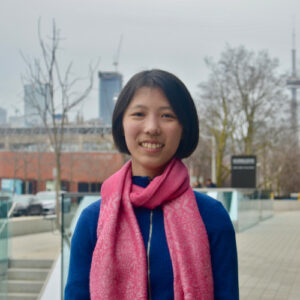
Ke Fan Bei’s bio
My personal perspective in the field of transplant continiously invigorates mydesire to contribute. To that end, I am PFD partner with the CDTRP and I am currently pursing a PhD in Immunology with the University of Toronto with a focus on transplant immunology.
Princess Okoh
P rincess is a first-year master’s student at the Institute of Medical Science at the University of Toronto. She obtained her medical degree from the University of Benin, Nigeria. Princess is interested in understanding barriers resulting in health inequities among marginalized populations, particularly those affected by chronic health conditions like kidney disease. She is currently a member of the Kidney Health Education and Research Group working on ACTION, a project to improve access to Living Donor Kidney Transplantation in Ethno-racial Minority communities in Canada. In addition, she is aspiring towards a career in population health research and academia. Throughout my academic and professional career, I have participated in several outreach programs with organizations providing medical services to rural communities affected by non-communicable diseases like chronic kidney disease and complicated by infectious diseases. Working in these communities has spurred my desire to acquire the requisite research skills to understand existing health disparities in marginalized populations and reduce these health inequities. Hence my reason for undertaking an MSc. degree in Medical Science and working at Kidney Health Education and Research Group.After the completion of my MSc. degree. I intend to pursue a Ph.D., which would allow me to pursue new questions and delve into specific research areas that will benefit marginalized groups. With a Ph.D., I hope to obtain a faculty position where I can continue my research interests and teach students. With my research, I hope to contribute to creating sustainable health policies that will improve health outcomes.
Aisha Adil
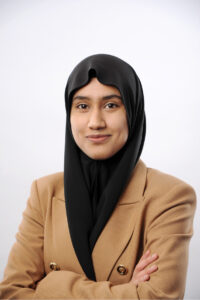
Aisha is an MSc graduate student through Institute of Medical Science atUniversity of Toronto under the supervision of Dr. Siba Haykal and Dr. Golnaz Karoubi. Her research location is in Latner Thoracic Surgical Research Laboratories at University Health Network. Aisha previously obtained an Honours Bachelor of Science at the University of Toronto, with a specialization in Health and Disease before proceeding to graduate studies. Her research focuses on tissue engineering composite rat hindlimbs using tissue de- and recellularization for vascular composite allotransplantation (VCA). She has published her work on decellularization of the rat hindlimb and is currently assessing recellularization strategies. She is a recipient of numerous awards including the Banting and Best Canada Graduate Scholarship (CGS-M). She has presented her graduate work at various conferences locally and nationally. She aspires to continue in academia medicine by pursuing further doctorate training through a clinician-scientist pathway.
Evaluation of indications for genetic assessment in living kidney transplant donors and relevant Canadian practices in light of the current international guidelines
Ke Fan Bei, Aisha Adil, Somaya Zahran, Princess Okoh, Ahsan Alam
Background: End stage renal disease (ESRD) is a prevalent condition with tendency to familial clustering in up to 27% of the affected individuals. Living donor kidney transplantation (LDKT) is a superior treatment option for kidney. However, in the United States, 40% of all living kidney donors (LKDs) are biologically related to their recipients which makes these recipients liable to worse graft survival and subjects donors to higher future risk of ESRD. Although not fully understood, this observation could be partially explained by genetic predisposition to kidney diseases.
Although genetic testing of potential LKDs could be of utmost importance as it improves risk assessment and informs the safety of donation, the strategy to evaluate these donors is still evolving and there are no clear recommendations in the light of the current international guidelines which are largely based on expert opinions due to lack of a reliable body of evidence to support strong recommendations and inefficiency of the current testing modalities.
Within the Canadian context, there is no standard-of-practice that unites different transplant centers regarding indications of genetic assessment for LKDs.
Method: International guidelines were reviewed to compare the indications for genetic assessment of LKDs for underlying CKD-predisposing genotype. Surveys were sent to 25 Canadian transplant centers to examine their protocols for LKDs genetic assessment.
Conclusion: This study aims to provide an overview of the current practices of the Canadian transplant centers regarding genetic assessment of LKDs, hoping to guide future directions to promote their outcomes.