Presenter: Dr. Marcelo Cypel


Presenter: Dr. Marcelo Cypel
This research is driven by patient- and family-identified needs to support the quality of life and wellbeing of mothers of pediatric heart transplant recipients. It leverages Mindfulness-Based Stress Reduction (MBSR), delivered at an ecological retreat, as an innovative intervention to meaningfully address the complexities of caregiving and caregiver burden. A mixed-methods design will be employed to examine potential changes in maternal coping styles, distress tolerance, quality of life and perceived social support following the intervention – a MBSR retreat. The retreat will be comprised of mindfulness exercises such as circle sharing, deep relaxation, yoga and walking meditation. Guided by the experiential expertise of our patient partner, Joanna Mitchell, this research places a strong emphasis on patient- and family-centred care, targeting the intersection of maternal wellbeing and child health outcomes within pediatric transplantation.
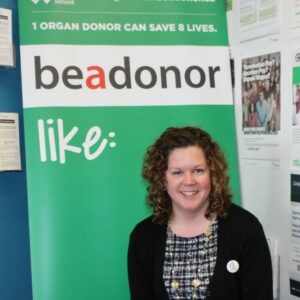
Joanna Mitchell is the mother to 16-year-old Ryley who received a heart transplant at 7 months of age. Soon after Ryley’s transplant, the Mitchell Family became involved as volunteers with the Trillium Gift of Life Network to encourage others to consider organ donation by sharing Ryley’s story. Joanna and Ryley were presented with the TGLN Board of Directors Champion Award in 2017 for their contribution to raising awareness for organ donation.
When Ryley was 5, she participated in her first Canadian Transplant Games and the family became involved with the Canadian Transplant Association. With the CTA, Joanna has helped to organize various events to promote both organ donation and healthy active living after transplantation. Joanna has also worked as a parent liaison to bring a pediatric and family perspective to the transplant games. She encourages connections of transplant families by facilitating various social media groups and informal mentorship.
Joanna became a patient caregiver partner with Canadian Donation and Transplantation Research Program more recently with a focus on projects related to pediatrics and the mental health of not only the transplant patient but the family as a whole.
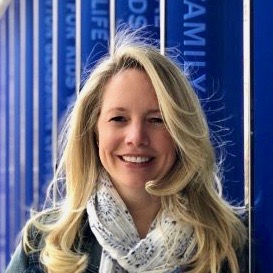
Dr. Samantha J. Anthony is a Health Clinician Scientist in the Child Health Evaluative Sciences Program of the Research Institute at the Hospital for Sick Children. She has nearly 20 years of experience in the SickKids Transplant and Regenerative Medicine Centre as a Social Worker and is an Assistant Professor in the Factor-Inwentash Faculty of Social Work at the University of Toronto. Dr. Anthony is also an Investigator with the Canadian Donation and Transplantation Research Program.
Dr. Anthony has been recognized for her dedication to clinical practice and the application of research for improved patient outcomes. Her program of research centres on establishing an evidence-based foundation for successful psychosocial adaptation and enhanced quality of life for individuals with chronic disease, with a specific focus on pediatric solid-organ transplantation. Dr. Anthony has received national academic scholarships and has obtained competitive grants and research awards, including funding from Health Canada, CIHR, Canadian Child Health Clinician Scientist Program, Enduring Hearts, Kidney Foundation of Canada and The International Society for Heart and Lung Transplantation.
Psychosocial assessments are a required component of a comprehensive transplant work-up. One aspect of this assessment is determining the breadth and depth of a patient’s support system. The transplant team, often the social worker, will provide direction to the support person about expectations of the healthcare team pre, peri and post transplant. While recommendations about resources for support people are often made, there is a paucity of support for caregivers, as the focus is primarily on the patient. There is a need for more funding and resources for caregivers of transplant patients, as they are a vital component to transplant success.
Dee Miner has both a Bachelor’s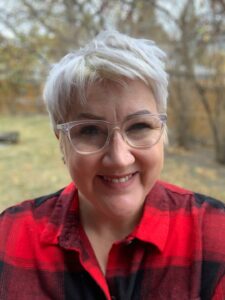 and a Master’s degree in clinical social work from the University of Calgary. She has been practicing medical social work with Alberta Health Services for 18 years. Her last 14 years have been as the Liver and Lungtransplant social worker for the Southern Alberta Transplant Program at Foothills Hospital in Calgary. In addition to supporting patients both pre and post transplant, she is responsible for completing the psychosocial assessments prior to transplant listing. To date her research has been focused on teaching coping skills to pre-transplant patients.
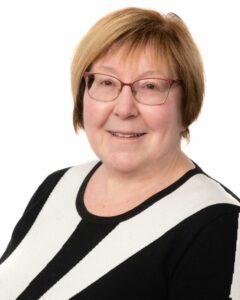
Janet Fast is a family and consumer economist and Professor in the Department of Human Ecology at the University of Alberta and is Co-Director of the Research on Aging, Policies and Practice program. Dr. Fast works to create and transfer knowledge, to engage with public, government and other user groups, and to work at the interfaces among them. Her research focuses the economics of aging, the paid and unpaid care of family members and the capacity of assistive technologies to address the consequences family care. Her research addresses family, labour, health and continuing care policy issues, and she is often called upon to consult with or advise government policy-makers and NGOs on policy related to caregiving and workplace supports.
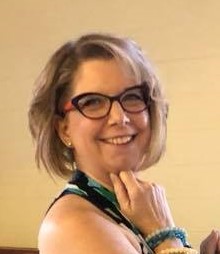
Sandy Sereda, is an experienced not-for-profit leader who currently serves as Executive Director of Caregivers Alberta where she champions the province’sone million caregivers. Sandy has had a rich and varied career in the not-for-profit sector with a focus on organizational management. She has a passion for mission-driven organizations having served previously with TheMustard Seed and The Lung Association, Alberta and NWT among others.
As a caregiver for most of her life, Sandy has a deep understanding of the joys and challenges associated with caregiving. She has been involved in scores of research projects, provincial health initiatives and national forums, bringing a broad understanding of the scope of issues impacting caregivers and a collaborative spirit to advance “caregiver friendly” health and social care.
Sandy has a Bachelor of Fine Arts degree from the University of Victoria and also studied Arts Administration at MacEwan University.
Navigating the organ donation and transplantation (ODT) system in Canada can be complex and confusing for people on a transplant journey. This qualitative study embraces the power of lived experience to guide and inform a truly patient-driven project in which research priorities have been defined by patients, families and donors. The online survey and focus groups central to the project were co-designed with patient research partners using an extensive iterative approach. Engaging patients from across Canada at every step of the research process is yielding a better understanding of the lived experiences of those on a transplant journey and will be instrumental in developing patient-led and patient-focused recommendations for long term improvements to the ODT system.
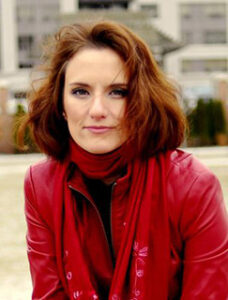
Carrie Thibodeau is serving as project lead for a qualitative study called Improving Engagement and EmpoweringPatients on their Transplant Journey. Her educational background is in the fields of applied health sciences and communications, and the focus of her professional career has been on kidney health.
She has worked closely with both patients and medical professionals for many years, and she has collaborated on multiple projects with the Kidney Foundation of Canada. On a personal level, Carrie has a close family connection to the renal and transplant communities. Her youngest uncle (and de facto big brother) is a three-time kidney transplant recipient and is now undergoing hemodialysis. His experiences have had a profound impact on Carrie both personally and professionally. This project has been an opportunity to be part of a team responsible for ensuring that patients’ lived experiences are central to the decisions being made about how best to manage organ donation and transplantation in Canada.
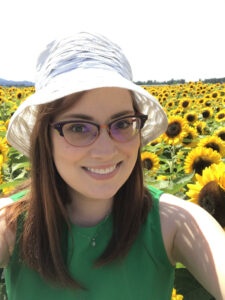
Kristi Coldwell is the Senior Advisor for Transplant Research Advocacy at the Transplant Research Foundation of BC. Having undergone a heart transplant as a teenager due to congenital heart disease, Kristi is acutely aware of the role research plays in improving outcomes and enhancing quality of life. She believes Patient and Family Partners have an important role in shaping and informing research to ensure it is meaningful and accountable to all stakeholders. She also serves as the co-chair for the Patient Advocate Advisory Committee of the Organ Donation and Transplant (ODT) Collaborative, a Health Canada initiative that brings together key stakeholders in Canada’s ODT system.
Manuel Escoto joins us from Edmonton, Alberta. He completed his Master of Public Health from the Univers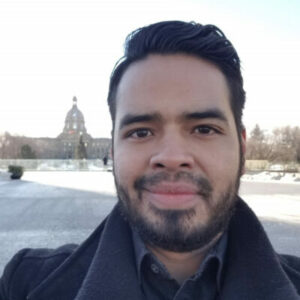 ity of Alberta and has received training in patient-oriented research through the University of Calgary’s PACER (Patient and Community Engagement Research) Program. He is the Patient, Family, and Donor Partnerships & Education Manager with the Canadian Donation and Transplantation Research Program. In this role, Manuel builds relationships patient partners with investigators and strengthens capacity among CDTRP patient partners.
As a kidney transplant recipient, Manuel has been a patient partner in various initiatives, including collaboration with the CAN-SOLVE CKD Network, The Kidney Foundation, Alberta Health Services, and other project focused on the health and well-being of kidney and transplant recipients.
Marie-Chantal Fortin’s bio
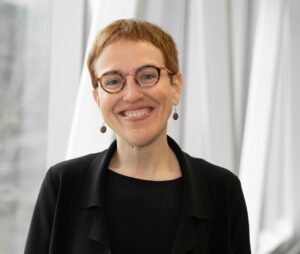
Marie-Chantal Fortin, M.D., Ph.D., F.R.C.P.(c) is a transplant nephrologist at the Centre hospitalier de l’Université de Montréal (CHUM), a researcher at the Research Center of the CHUM and a professor at the Faculty of Medicine of the Université de Montréal. She received her medical degree from the Université de Sherbrooke. She completed her nephrology residency at the Université de Montréal. She has completed a PhD in bioethics in 2008 at the Université de Montréal.
She is a researcher within the Canadian Donation and Transplantation Research Program (CDTRP) and the Theme 1 Academic Co-Lead. Her research interests are related to transplantation ethics and patient and researcher partnership in research and clinical care. She is a member of the ethics committee of Transplant Québec, the Canadian Blood Services and the Collège des médecins du Québec. Finally, she is also a research scholar of the FRQS.
One of the goals of The World Transplant Games Federation is to support full rehabilitation of transplant recipients through promoting physical activity. As part of this goal, an international research initiative has been launched which seeks to connect researchers from across the globe and provide assistance through various activities. In this talk, we will discuss our plans for how the research initiative will facilitate the engagement of patients, family and donors and what we are learning in the process.
 Anders Billström
 Gareth Wiltshire
Dr. Wall is Professor Emeritus of Surgery at Western University. He established liver transplantation at London Health Sciences Center where he served as Director of the Multi-Organ Transplant Program from 1997 to 2007. He was a founding member and President of the International Liver Transplantation Society. Dr. Wall took the medical lead in developing and establishing the curriculum onelifemanygifts to educate secondary school students in Ontario about organ donation and transplantation.
Bernadine Boulet is the mother of Logan Boulet. Logan made an incredible difference in the registration of Organ Donors following his donations to make the lives of 6 people better after passing from a brain injury sustained in the Humboldt Bronco bus crash in 2018. From this, the Logan Boulet Effect and Green Shirt Day grew, which made the topic of organ donation easier to broach. Bernadine (Bernie) teaches Grade 2 in Lethbridge, AB and continues to be an advocate of sharing about organ donation and transplantation with students in elementary schools. She works to make these topics about helping others and for families to have effortless, straightforward conversations together.
Working in an Alberta elementary school is not a place where the topics of organ donation and transplantation are common or part of the curriculum, but Bernie is finding ways to make these topics unworried conversations and discussions. Her personal experience and advocacy have led her elementary school (and many others) to share these topics in a safe, open ways with these young students.
This presentation draws on an ongoing qualitative study, which investigates why rates of Living Donor Kidney Transplantation (LDKT) vary widely between Canadian provinces. By understanding and comparing the provincial systems in BC, ON and QC, we hope to help improve LDKT in provinces with comparatively lower rates. During the presentation, we will discuss the some of the problems faced by patients, families and donors as they navigate the health system to pursue LDKT. We will discuss our partnership and shared goals as a research team, as well as some of our findings so far.