


Ruo Hao (Selena) Zhang’s bio
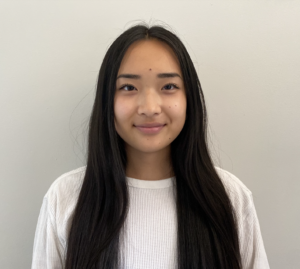
Ruo Hao (Selena) Zhang completed her undergraduate degree in Pathology at Western University and is currently enrolled in her second year of medical school at the Temerty Faculty of Medicine at the University of Toronto. She has budding clinical and research interests in gastroenterology, internal medicine, and quality improvement.
The Lay of the Land in Qualitative Liver Transplant Research: A Scoping Review and Network Mapping Study
Chloe Wong-Mersereau, Ani Orchanian-Cheff, Shikha Gandhi, Maryam Makki, Mamatha Bhat, and Suze Berkhout
Background: While there have been improvements in short-term survival for liver transplant patients, the lived experiences of transplant survivors are shaped by complications that accumulate over time. Qualitative research can examine the impact, meaning, and significance of these challenges. Despite this, qualitative research has a limited reach in the field of liver transplantation to date (Wall 2021).
Objective: To identify the range of issues faced by liver transplant survivors, their caregivers, and care providers as they are represented in the qualitative literature and understand how the field is evolving over time.
Methods: The review was conducted using the methodology by Arksey & O’Malley (2007). Studies from MEDLINE, Embase, Cochrane Database of Systematic Reviews, CENTRAL, CINAHL, and Web of Science were searched from database inception to August 2021. All English language studies focused on a liver transplant population with a qualitative component to the method were included. Using VOSviewer network mapping software we constructed a visualization of the thematic networks for included studies.
Results: Our initial search yielded 7380 studies. After removal of duplicates, 4808 abstracts and subsequently more than 300 full-text articles were screened, yielding a much smaller quantity of studies for review. A substantial minority of these studies were conference abstracts rather than full manuscripts. Thematically, quality of life was one of the most prominent issues examined in the literature, though many of these were limited in the time course they considered post-transplant. Very few studies utilized methods informed by critical theories.
Discussion: Limitations exist in how the liver transplantation experience is conceptualized by the qualitative literature. There is a shortage of qualitative studies examining the lived experience of liver transplant survivors beyond one-year post-transplant. Further research is needed to broaden our understanding of the complexities of transplant survivorship.